Use these lists as the specification in your cleaning contract rather than as a general guide. The single most common cause of office cleaning disputes is a contract that says "clean the office" and leaves both sides with different ideas of what that means.
Everything below is written so it can be copied into a schedule with a frequency and an hours allocation against each section.
Daily, or every visit
Reception and entrance
- Entrance door glass, both sides, at hand height
- Reception desk and counter
- Visitor seating wiped
- Floor vacuumed or mopped
- Entrance matting vacuumed
- Waste emptied
- Signage and directory wiped
Touch points, throughout
- Door handles and push plates
- Light switches
- Lift buttons and call panels
- Handrails
- Shared keyboards, mice and printer control panels
- Vending and coffee machine buttons
- Kitchen tap handles
- Access control readers and intercom panels
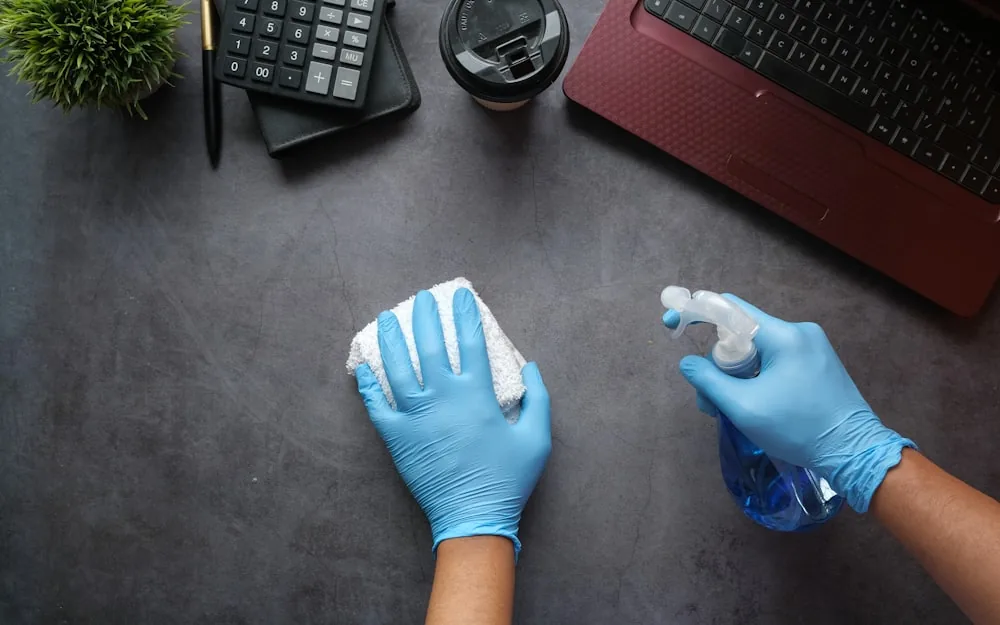
These are the lines that matter most for hygiene and the ones most often left generic. Name them individually and they get done. Specify the method too: detergent first, then disinfectant left wet for the contact time on the label. Disinfectant sprayed and immediately wiped achieves very little, and it is the most commonly mis-executed task in commercial cleaning.
Desks and workstations
- Clear desks wiped and disinfected
- Desk phones wiped
- Monitor bases and stands dusted
- Waste bins emptied
- Chairs pushed in and arms wiped
Desk cleaning requires a clear desk policy. If staff leave papers and equipment out, desks will not be wiped, and no contractor can fix that from their side.
Washrooms
- Toilets and urinals cleaned inside and out, including flush handles
- Basins, taps and surrounds
- Mirrors polished
- Cubicle doors, handles, locks and partitions at hand height
- Consumables restocked: soap, paper towels or dryers checked, toilet paper
- Sanitary bins checked and serviced per contract
- Waste emptied
- Floor mopped, including behind toilets
- Air freshener checked
Kitchen and breakout
- Worktops cleaned and disinfected
- Sink, taps and drainer
- Appliance exteriors: fridge, microwave, dishwasher, kettle, coffee machine
- Tables and chairs wiped
- Dishwasher emptied or run, by arrangement
- Waste and recycling emptied
- Floor mopped
Meeting rooms
- Tables wiped
- Chairs reset
- Whiteboards cleaned, unless marked do not erase
- Waste emptied
- Glass partitions spot cleaned at hand height
- Remote controls and conferencing equipment wiped
General
- All waste and recycling taken to the collection point
- Hard floors mopped
- Carpets vacuumed in traffic areas
- Spot clean marks on internal glass
- Lights off and premises secured
Weekly
- All carpeted areas vacuumed fully, including under desks and along edges
- Skirting boards
- Desk legs and chair bases
- Internal glass and partitions, fully
- Microwave interior
- Kitchen cupboard fronts
- Fridge exterior including the door seal
- Window sills
- Radiators and convector covers
- Fire extinguishers and signage dusted
- Stairwells fully cleaned including handrails and risers
- Waste bin interiors washed
- Lift interiors, including floor edges and door tracks
Monthly
- Fridge interior, cleared and cleaned by prior arrangement with staff
- Kitchen cupboard interiors
- Dishwasher filter
- High dusting to reachable height: tops of cabinets, picture frames, signage
- Air vents and grilles, accessible ones
- Under and behind moveable furniture
- Ceiling-height cobweb removal
- Washroom deep clean including descaling taps and limescale on urinals
- Entrance matting deep cleaned or replaced
- Kick plates and door bottoms
Quarterly
- Carpet deep clean in high traffic areas
- Hard floor machine scrub
- Internal windows fully cleaned
- Upholstered seating vacuumed and spot cleaned
- Blinds dusted or cleaned
- High level dusting above two metres, with appropriate access equipment
- Extract grilles cleaned
Annually or biannually
- Full carpet deep clean throughout
- Hard floor strip and reseal
- External window cleaning
- Upholstery deep clean
- Light diffusers cleaned
- Ductwork and extract systems, by specialist contractor
Turning this into a working contract
Assign a frequency to every line. Not "regularly", an actual frequency.
State the hours. A specification without allocated hours is unachievable by design. If your daily list takes two hours and the contract funds one, the list will not be completed, and nobody will have agreed which half gets dropped. It will be the half nobody sees, which is usually the hygiene half.
Name the method for touch points. Detergent, then disinfectant, left wet for the labelled contact time.
Agree consumables. Who supplies, who monitors, what the reorder trigger is, and who to call when soap runs out at nine in the morning.
Set an inspection routine. A monthly walk-round against this list, logged and dated, with a named person on each side. Ten minutes a month prevents the slow decline that ends most cleaning contracts.
Include the periodic schedule and its price at contract stage rather than requesting it ad hoc later, which always costs more and frequently never happens at all.
Specify storage. A lockable cupboard for equipment and chemicals, which COSHH requires for hazardous substances.
What to leave out
Some things belong to the employer, not the contractor, and writing them into a cleaning contract creates friction:
- Individual staff washing up
- Clearing personal items from desks
- Dealing with personal food left in the fridge, beyond an agreed monthly clear-out
- Confidential waste, which needs a separate certified destruction process
- Clinical or hazardous waste
- Anything requiring work at height beyond a small step, without proper equipment and method statements
- IT equipment beyond external wiping
Legal minimum
Whatever you specify, employers in Great Britain have a duty under the Workplace (Health, Safety and Welfare) Regulations 1992 to keep workplaces, furniture, furnishings and fittings sufficiently clean, and to remove waste and dirt appropriately. Washroom provision, including suitable washing facilities with soap and a means of drying, is also covered.
A cleaning specification is one of the main ways that duty is discharged, so it is worth having it written down properly rather than relying on an understanding.
Frequently asked questions
How many hours does a standard office need? As a rough guide, one hour per 250 to 400 square metres for a daily clean of a standard open plan office, plus washroom time. Washrooms are the variable that breaks the rule.
Should I specify products? Specify outcomes and any restrictions, such as pH-neutral on stone floors or fragrance-free in a sensitive environment. Specifying brands usually costs more without improving results.
Who checks it has been done? The contractor should audit their own work, and you should spot check monthly. If the only quality control is you complaining, standards will drift.
What about hot desks? Specify them explicitly as touch points cleaned daily, since shared workstations are used by more hands than fixed desks.
How do I stop the specification drifting? Quarterly review against the written list, dated and logged. Drift happens in contracts nobody reviews.