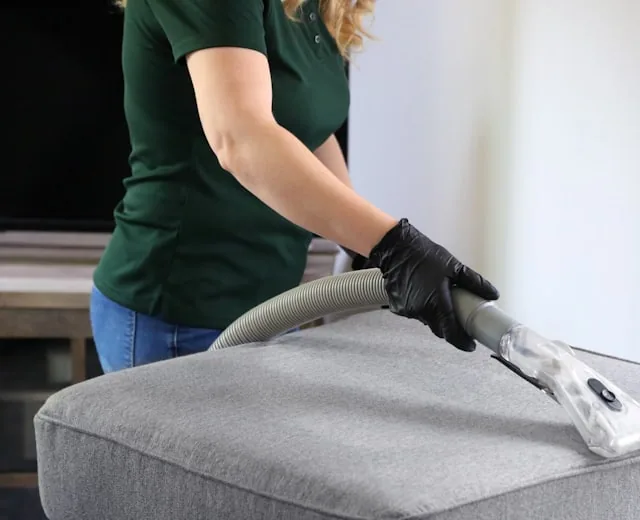
Professional carpet cleaning almost always means hot water extraction, often called steam cleaning although no steam is involved. A pre-spray breaks down soil, the fibres are agitated, then a machine injects hot water under pressure and immediately vacuums it back out along with the suspended dirt.
The difference from vacuuming is not thoroughness, it is physics. A vacuum removes dry particulate sitting in the pile. Extraction removes oily, bonded soil that has attached itself to the fibres, which is what makes a carpet look dull and grey rather than obviously dirty.
The main methods
Hot water extraction
The industry standard for most residential carpets, and the method to expect unless there is a specific reason otherwise.
The process: inspect and identify fibre type, vacuum thoroughly, apply a pre-spray suited to the soiling, agitate with a brush or rotary tool, allow dwell time, then extract with hot water at pressure. Finish with a neutralising rinse and groom the pile.
Machines are either portable or truck-mounted. Truck-mounted systems generate more heat and stronger vacuum, which means better soil removal and faster drying, but they need vehicle access and a hose run. Portables are more flexible, particularly in flats and upper floors, and modern ones are perfectly capable.
Drying takes roughly two to six hours with good technique and ventilation. Anything longer suggests over-wetting or poor extraction, which is a technique problem rather than an inevitability.
Low moisture and encapsulation
An encapsulating chemical or absorbent compound is worked into the pile and vacuumed out once dry.
Drying is under an hour, which is the main advantage. Soil removal is less thorough than extraction, so it suits maintenance between deep cleans, offices needing overnight turnaround, and carpets where moisture is a genuine risk.
Bonnet cleaning
A rotary machine with an absorbent pad and cleaning solution. Fast, cheap and common in commercial settings for appearance maintenance.
It cleans the top of the pile only, and used repeatedly it can leave residue that attracts soil, making carpets re-soil faster. Acceptable as an interim measure, poor as a substitute for extraction.
Dry compound
An absorbent compound spread, brushed in and vacuumed out. Very short drying time, gentle, suitable for moisture-sensitive carpets. Less effective on heavy soiling.
What it removes, and what it does not
It removes: oily and greasy soil, dust and particulate deep in the pile, pet dander and embedded hair, most food and drink spills, general dulling, and many odours where the source is in the carpet.
It does not remove: permanent dye stains from bleach, certain medicines or strong colourants; wear where the fibre tips have abraded; sun bleaching; or odour where urine has soaked into the underlay and subfloor.
That last point deserves emphasis. If a pet has repeatedly urinated in one spot, the contamination is usually beneath the carpet. Cleaning the carpet will improve it temporarily and the smell will return, because the source is still there. An honest cleaner will tell you the underlay needs replacing rather than selling you a second treatment, and how a company handles that conversation is a fair test of who you are dealing with.
What to expect on the day
Before: clear small furniture, ornaments and anything on the floor. Most companies move larger items and put protective tabs under the legs, but ask, because some charge for it. Vacuum if you can, though they will vacuum again.
During: an inspection first, including fibre identification, because wool and synthetic carpets need different chemistry. A pre-test in an inconspicuous area for colourfastness. Then pre-spray, dwell, agitate, extract.
After: the carpet will be damp, not wet. Air movers speed drying considerably. Keep off it until dry, or wear clean shoe covers. Ventilate, and in winter run the heating with a window slightly open rather than sealing the room.
Do not replace furniture until fully dry, and use protective tabs under metal or wooden legs for at least 24 hours. Otherwise you get rust marks or wood stain bleeding into a freshly cleaned carpet, which is far harder to remove than the original soil.
Fibre types matter
Wool is the one that catches people out. It is alkaline-sensitive, so high-pH cleaners damage it, causing colour loss and texture change. It also holds more water so it takes longer to dry. Wool needs a specialist pH-neutral or slightly acidic product and lower moisture. Wool carpets are also prone to cellulosic browning if over-wetted.
Nylon is the most common synthetic in UK homes: durable, responds well to extraction, and generally forgiving.
Polypropylene is very stain resistant to water-based spills but oil-loving, so greasy soil bonds to it readily. It also melts under high heat, so aggressive machines need care.
Polyester is soft and stain resistant but crushes more readily and holds oily soil.
Sisal, jute, seagrass and coir should generally not be wet cleaned at all. Water causes shrinkage and permanent brown watermarks. These need dry methods only.
If a company does not ask what your carpet is made of, that is a warning sign.
Common problems and what causes them
Rapid re-soiling after cleaning. Almost always detergent residue left in the fibre, which is sticky and attracts soil. Caused by insufficient rinsing. A proper neutralising rinse prevents it.
Browning or yellowing after drying. Usually over-wetting on wool or on a jute-backed carpet, drawing lignin up from the backing. Faster drying prevents it.
Stains reappearing after a few days. Wicking, where the spill reached the backing and drew back up as the carpet dried. Retreat and use a weighted absorbent pad overnight.
Shrinkage. Over-wetting, usually on natural fibres or a loosely fitted carpet. Not reversible in most cases.
Rippling after cleaning. Moisture absorption in a carpet that was not stretched properly at installation. Usually settles as it dries; if not, it needs re-stretching.
How often
For most homes, once a year. Every six months for households with pets, young children or heavy traffic, and every 12 to 18 months for a lightly used carpet in a quiet home.
Many carpet manufacturers require professional cleaning at defined intervals as a warranty condition, commonly every 12 to 24 months, sometimes specifying hot water extraction by a qualified technician and requiring receipts as evidence. If your carpet is under warranty, read the terms, because failing to comply can void cover you already paid for.
Choosing a company
- Ask which method they use and why, for your specific carpet
- Ask whether they identify fibre type and colourfast test before starting
- Ask about drying time, and be sceptical of anyone claiming an hour after full extraction
- Check public liability insurance
- Ask what is included: moving furniture, pre-spray, protective tabs, deodoriser, stain protector
- Be wary of very low headline prices per room, which typically escalate on the day
- Ask what happens if a stain does not come out
- Ask whether they carry any recognised industry certification
That last-but-one question is the useful one. A professional will tell you before starting which marks are likely to be permanent. Someone who promises everything will come out is either inexperienced or setting up a difficult conversation later.
Frequently asked questions
Is steam cleaning the same as hot water extraction? The terms are used interchangeably in the trade, though no actual steam is involved. It is hot water under pressure, immediately extracted.
How long until I can walk on it? Two to six hours for light use with clean feet or shoe covers. Wait until fully dry before replacing furniture.
Will it damage my carpet? Not when done correctly for the fibre type. Damage comes from wrong chemistry, over-wetting, or excessive heat on heat-sensitive fibres.
Can I clean carpets in winter? Yes, but ventilation matters more. Run the heating with a window slightly open, and allow longer drying.
Do I need stain protector? It genuinely works, giving you longer to blot a spill, but it is not essential and it wears off. Decide in advance rather than being upsold on the doorstep.
Should I move the furniture myself? Move small items and ornaments. Ask whether larger furniture is included, since practice and pricing vary.